A historic milestone was registered in 2025, with Gross Written Premiums (GWP) exceeding Ugx2 trillion for the first time. This signals a maturing market driven by surging demand for life insurance and stronger consumer confidence.
While releasing the sector performance year ending 2025 at a press briefing on June 26, 2026 at the Insurance Tower, the Acting Chief Executive Officer of the Insurance Regulatory Authority (IRA) Dr. Sande Protazio said, “total premiums grew by 14.72% to Ugx2.024 trillion, up from Ugx1.764 trillion in 2024.”
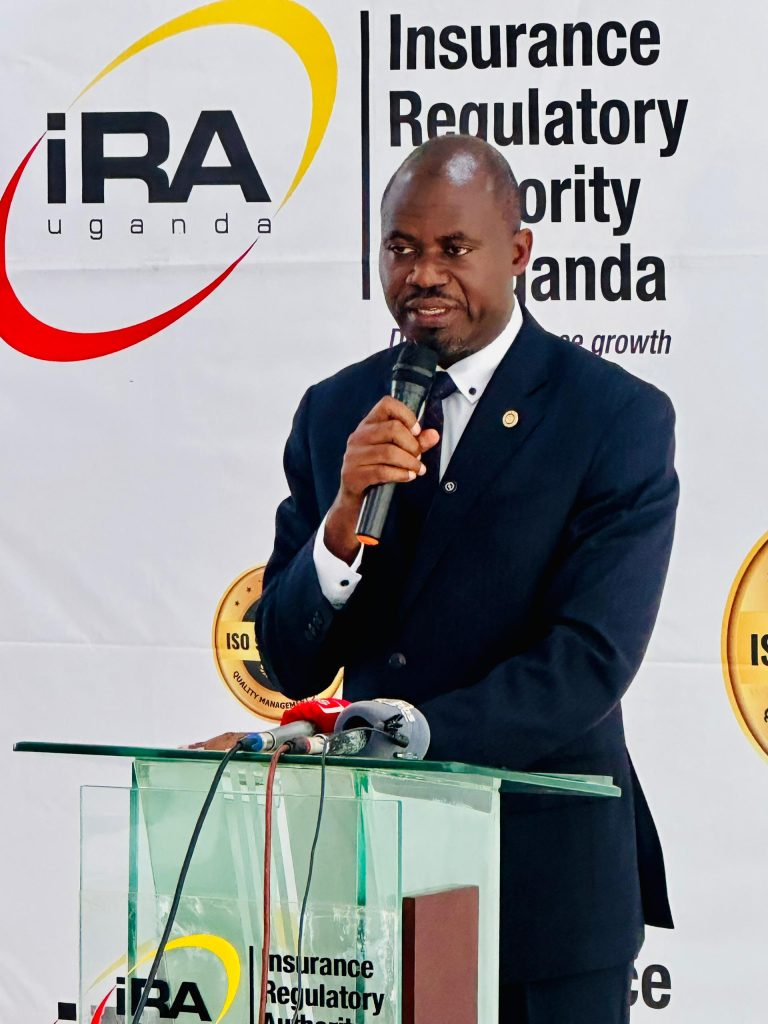
“Uganda’s insurance sector grew stronger and more resilient in 2025,” Dr. Sande said, citing robust premium growth, rising assets, improved capital adequacy and increasing claims payments as evidence of the industry’s expanding role in the country’s economic transformation.
The strongest growth came from life insurance, where premiums rose from Ugx702.2 billion in 2024 to Ugx977.6 billion in 2025 representing a 39.21%. This increased the segment’s market share of total industry premiums to 48.31% nearly matching the non-life segment standing at 49.49%.
Dr. Sande noted that this represents a significant transformation in Uganda’s insurance market as it reflects growing appreciation of insurance as a tool for long-term financial security, wealth creation, retirement planning and family protection.”
“The faster growth rate in life indicates a positive trend towards individuals prioritizing long-term financial security protection. This shift suggests that people are increasingly recognizing the importance of safeguarding their futures and that of their loved ones, reflecting a growing awareness and readiness to invest in comprehensive financial planning and security measures,” he said
The sector also remained strong and resilient, with total assets rising to Ugx3.459 trillion and capital adequacy ratios remaining comfortably above regulatory requirements.
In the period, insurers were able to pay out genuine claims up to Ugx934.55 billion in 2025 compared to Ugx887.55 billion in 2024. “Nearly, Ugx1 trillion was returned to policyholders, beneficiaries, families and businesses affected by insured events. This increasing level of claims payments demonstrates the industry’s growing capacity to fulfil its promises and reinforces public confidence in insurance as a reliable financial safety net,” Dr. Sande emphasized.
Beyond the industry’s financial performance, the Authority also provided updates on several strategic policy initiatives expected to deepen insurance penetration and strengthen risk management across the country.
On insurance of National Assets, Ms. Ethel Mulondo, IRA’s Manager for Regulations, Drafting & Compliance, representing the Director Legal and Secretary to the Authority, said government discussions on the insurance of national assets have progressed to Cabinet level, with priority currently being placed on the insurance of government motor vehicles.

“The proposal is awaiting Cabinet consideration. We are optimistic that if approved, its implementation will safeguard public assets and reduce the financial burden on government arising from uninsured losses,” Mulondo noted.
On the oil and gas sector, IRA’s Director Supervision Mr. Benard Obel said the Authority is working closely with the Petroleum Authority of Uganda (PAU) to strengthen insurance arrangements for the country’s oil and gas infrastructure.

“The objective is to ensure adequate risk coverage is provided before major operations commence,” said obel noting that Uganda is drawing lessons from the experiences of countries such as Ghana to build a robust insurance framework for the sector.
On the National Health Insurance Scheme, IRA’s Manager Risk and Actuarial Mr. Musa Sebuufu revealed that discussions are too at Cabinet level following conclusion of consultations and engagements between the Authority and the Ministry of Health. “IRA and other stakeholders are now awaiting the re-tabling of the Bill to Cabinet,” Sebuufu added.

Looking ahead, the IRA projects a 10% premium growth in 2026, supported by infrastructure investments, oil and gas developments, digital innovation and expanding distribution channels.