
Despite being the backbone of Uganda, providing employment and livelihoods for a significant portion of the population, agriculture remains a risky venture. Most farmers encounter considerable challenges, including climatic risks and diseases, among others.
Farmers have watched helplessly as their investments – cash, energy, and time, go to waste due to natural calamities such as prolonged drought, excessive rainfall, unpredictable weather patterns, and the threat of pests and diseases. This exposes them to losses if no mechanisms are put in place to address such risks.

As thus, many farmers have become risk-averse and are not willing to invest sufficiently in agriculture. Besides threatening food security and stability, the shocks can cripple livelihoods, disrupt value chains, and even undermine macroeconomic stability.
Amidst these risks, agricultural insurance emerges as a critical safety net for farmers. It serves as a risk management tool that provides farmers with financial security against losses in production.
Additionally, it mitigates risks lending to agriculture, enabling repayment of loans, minimizes budget volatility of agriculture-related fiscal expenditures by transferring risks to the private sector, and stimulates growth of the agriculture sector, which can unlock job creation potential.
Agriculture insurance involves the insured (farmer) paying a little sum of money (premium) to an insurance company (insurer) to secure a guarantee against losses due to any of the risks like floods, drought, pests and diseases. This coverage is for a specific period-of-time, usually up to a farming season or year with the insurer promising compensation if such losses occur so that a farmer gets back to the position they were in before the occurrence of the incident.Bottom of Form
Government subsidy
Fortunately, in 2016/2017, Government introduced the Uganda Agriculture Insurance Scheme (UAIS) offering farmers access to subsidized insurance. The UAIS is managed by Agro Insurance Consortium, an umbrella organization for all insurance companies offering agriculture insurance, covering crop, livestock, aquaculture and apiculture risks, among others. Annually, government allocates a Shs5 billion premium subsidy under the UAIS to help farmers to afford agriculture insurance at a reduced rate
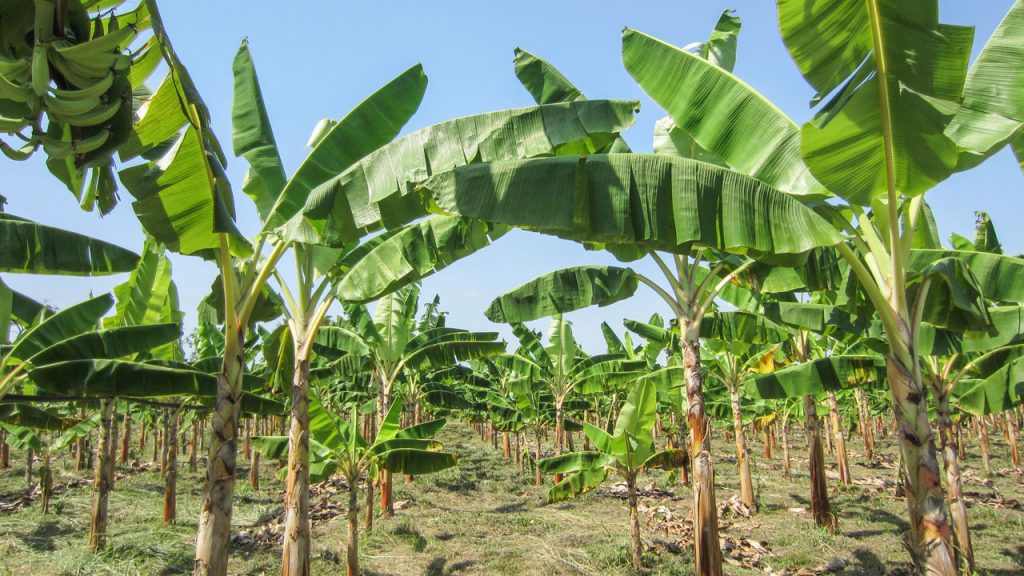
Industry records show that farmers who have embraced agriculture insurance have greatly benefited from the scheme with a cumulative number growing from 45,704 farmers to 772,184 as at end the 2023/24 Financial Year. Equally, the claims paid under the scheme have increased from Shs2.2 billion in 2017 to over Shs33.4 billion cumulatively by end of 2023/24 FY.
With this compensation, farmers can boost their agricultural earnings, expand their farming initiatives and projects, and increase their overall income compared to those without insurance, thereby raising their standards of living.
High demand
We’re pleased to see that farmers are gradually embracing insurance and currently, the demand for the agriculture insurance subsidies is exceeding the available supply. We are in discussion with the Ministry of Finance Planning and Economic Development to increase the subsidy aiming at encouraging more farmers to adopt and embrace insurance and approach agriculture as a business venture. We are now focusing of bringing agricultural insurance services closer to farmers nationwide, with a goal of licensing at least 12,000 dedicated agricultural insurance agents in addition to the existing 3,681 agents who currently sell other insurance products and services. I thus encourage all farmers across the county to embrace agriculture insurance as a risk mitigation measure to ensure sustainable food production and food security.
The writer is the Chief Executive Officer, Insurance Regulatory Authority of Uganda