
It was merrymaking at Hotel Africana as 1,161students received Diplomas and certificates in insurance at the 10th Insurance Training College (ITC) graduation ceremony.
Of these, 799 students received Certificates of Proficiency, 264 were for a Certificate in Insurance, 93 were for a Diploma in Insurance while 7 graduated with an Advanced Diploma in Insurance.

The event was celebrated the Class of 2025 under the theme “A decade of professional excellence: shaping the future of insurance”
Speaking at the ceremony on December 3, 2025, the ITC Principal urged the graduands to uphold professionalism, saying that insurance is a promise that should be honored at all times.

“Remember insurance is a promise to respond, a promise to protect, a promise to stand with people when life become unpredictable. Don’t deviate from it,” he said.
The Chairman Board of Directors, Dr. Abdul Hafiz Walusimbi urged graduands to pursue specialized qualifications, embrace new technologies and remain open to learning.

He also urged them to master soft skills that shape human interaction like emotional intelligence and leadership to excel in the ever-evolving insurance field.
“Technical expertise in underwriting, claims or broking is only one part of what defines a successful professional. You also need soft skills,” he said.
Desist temptation
The Insurance Regulatory Authority of Uganda Chief Executive Officer, Alhaj Dr. Kaddunabbi Ibrahim Lubega also alluded to the need to uphold professionalism and desist temptation, noting that insurance is a business of trust.
“A miss-sold policy, a poorly handled claim or misinformation can undo years of progress. Let your ethics be stronger than any temptation,” he said.
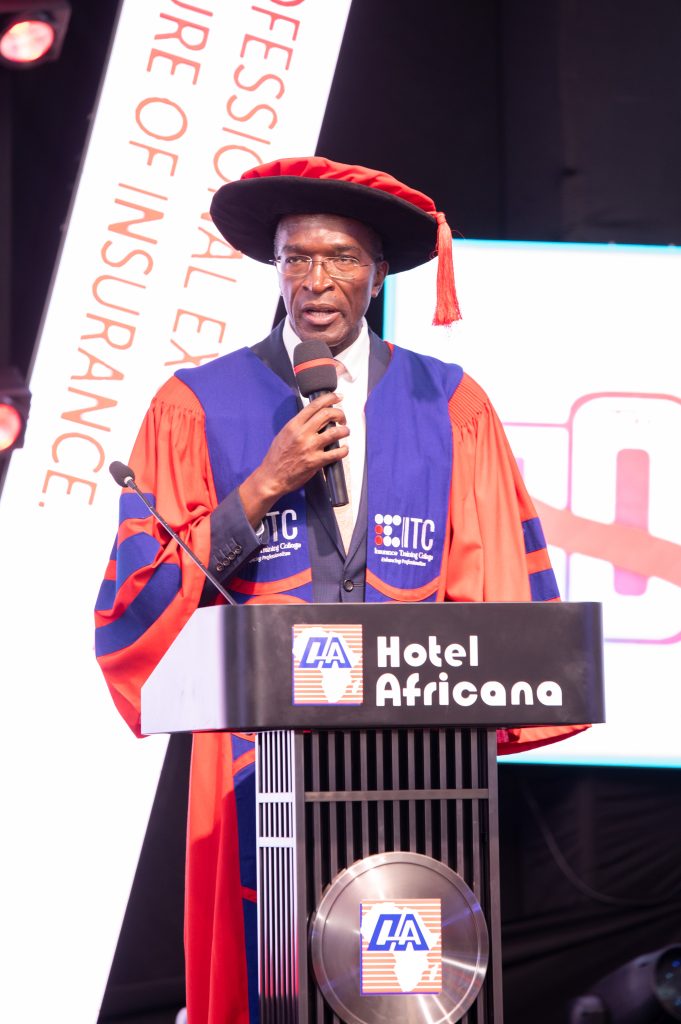
He also advised them to study and understand the environment in which they work when designing products, saying that the current regulatory and tax regime directly affect the industry.
“General insurance remains subjected to 18% VAT, stump duty, withholding tax. These are not just numbers; they have significant impact on the affordability of insurance for ordinary Ugandans,” he said.
Alhaj Dr. Kaddunabbi further urged the graduands to interest themselves in designing digital distribution channels and innovate agriculture insurance solutions to protect Uganda’s farmers given that Uganda is an agricultural economy.
The State Minister for Internal Affairs, Gen. David Muhoozi, who was the Guest of honour applauded the insurance industry for the great role it is playing to de-risk the economy and promote peace and stability.
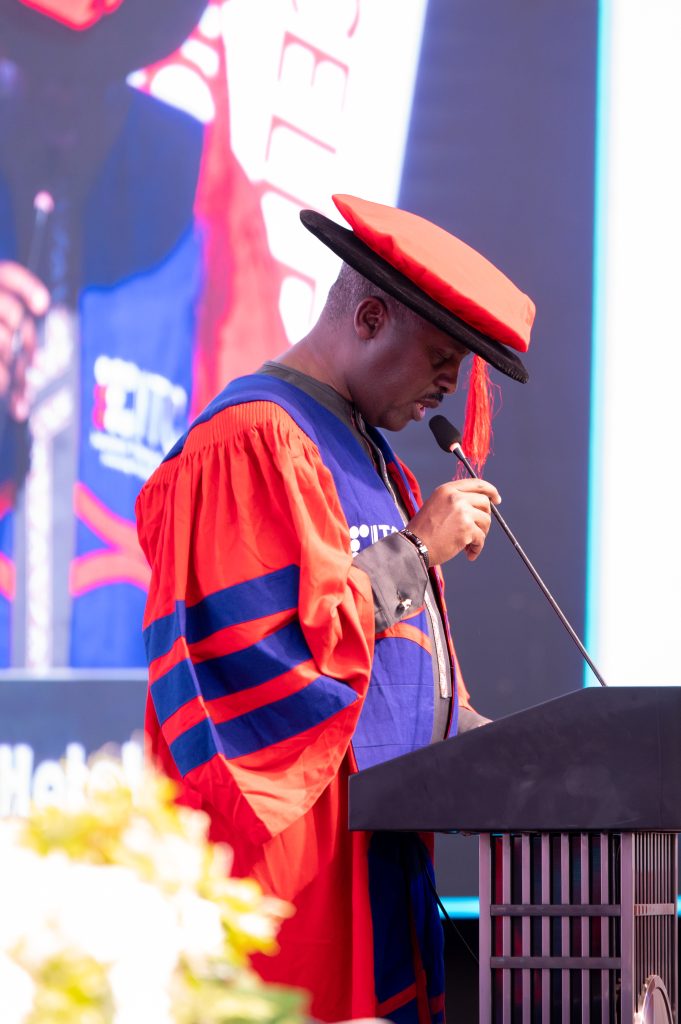
According to Gen. Muhoozi, the insurance industry plays a great role in de-risking the economy and promoting peace and stability.
“A robust insurance sector is a right investment in Uganda’s security and stability. When disaster wipes out livelihoods, the risk of desperation and crime increases and thus insecurity,” he said.
He explained that security is not just the absence of war, saying that it extends to other spheres like shelter, food, health, education and social security.
“When a fire destroys a business or natural disasters strike a community, it is the insurance sector that stands between order and chaos; hope and being disparate,” he said.
He further noted that the Ugx.887.5b paid out in claims in 2024 was not just money; it was businesses saved, homes repaired and livelihoods restored resulting in stability of the country.
He added that by training professionals, the industry directly contributing to the law, order and peace that government is trying to uphold.
National vulnerability
He, however, challenged insurers to be more proactive and enroll more farmers, saying they need insurance protection more given the strategic importance of agriculture to the country.
“Over 70% of the population depends on agriculture and yet less than 1% of farmers have agriculture insurance. This protection gap is a national vulnerability that can lead to crime and disrupt security.
“By closing the gap, insurance becomes a proactive tool to prevent the descent into crime and reduce the burdens on our justice systems,” he said.
He added: “This illustrates the nexus between human security and national stability. It is the trinity of security, stability and prosperity; they go together. The lack of one of them affects the others,” he said.